
Market Gap
Hot, humid regions are an untapped market for everyday care.
Hot, humid climate zones are home to 40% of the world’s population, and summer in the Northern Hemisphere is already 17 days longer. Heat, humidity, sweat, sebum, air pollution and air conditioning keep affecting skin condition, texture, makeup wear and what people expect a product to do. When products ignore local climate, users compromise on comfort or on results, and still can’t find something that suits them.
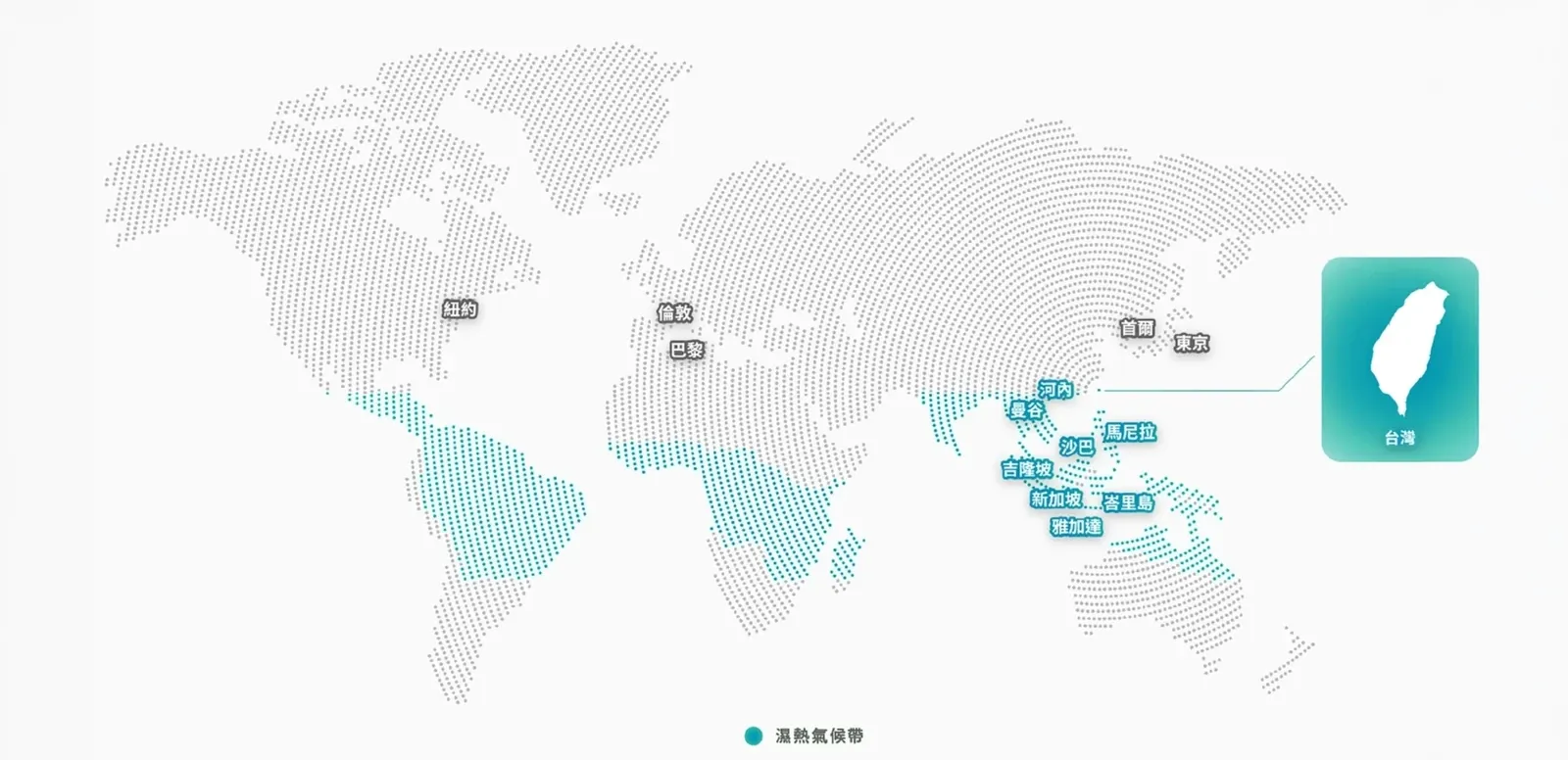
Today’s industry standards still lean toward the lifestyles and skin behaviour of cold, dry regions. In hot, humid regions, skin response, sensory experience, product claims and daily needs all diverge from them. Drawing on large-scale market surveys and research, T-Dimensional Beauty offers a climate-adaptive view of skincare and product development.
40%
of the world’s population lives in hot, humid climate zones
17days
longer Northern Hemisphere summers, with hotter and more humid living conditions worldwide
0.003%
share of research on non-cold, non-dry regions among 10,000 skincare papers
80%
of people in Taiwan have not found a skincare routine that suits them*T-Dimensional Beauty market survey

Climate Skin Issues
Sensitivity, dullness, oiliness: three concerns solved, your glow restored
Taiwan’s heat, humidity, UV, air pollution and air conditioning expose skin to external stress for long hours. What consumers experience can’t be explained by a single skin-type label. It has to be read together with climate, daily life and how products feel in use.
01 / Sensitive
Sensitivity
Temperature swings, frequent cleansing, air pollution and external irritants easily unsettle the skin. Products need to lighten the load while keeping up daily protection.
02 / Dullness
Dullness
Solar radiation, UV and metabolic stress affect brightness and overall complexion. Product decisions need to account for climate stress and daily defence.
03 / Oiliness
Oiliness
Heat and humidity amplify sebum, sweat and stickiness. Products that only chase richness easily throw comfort and makeup performance off balance.
Philosophy
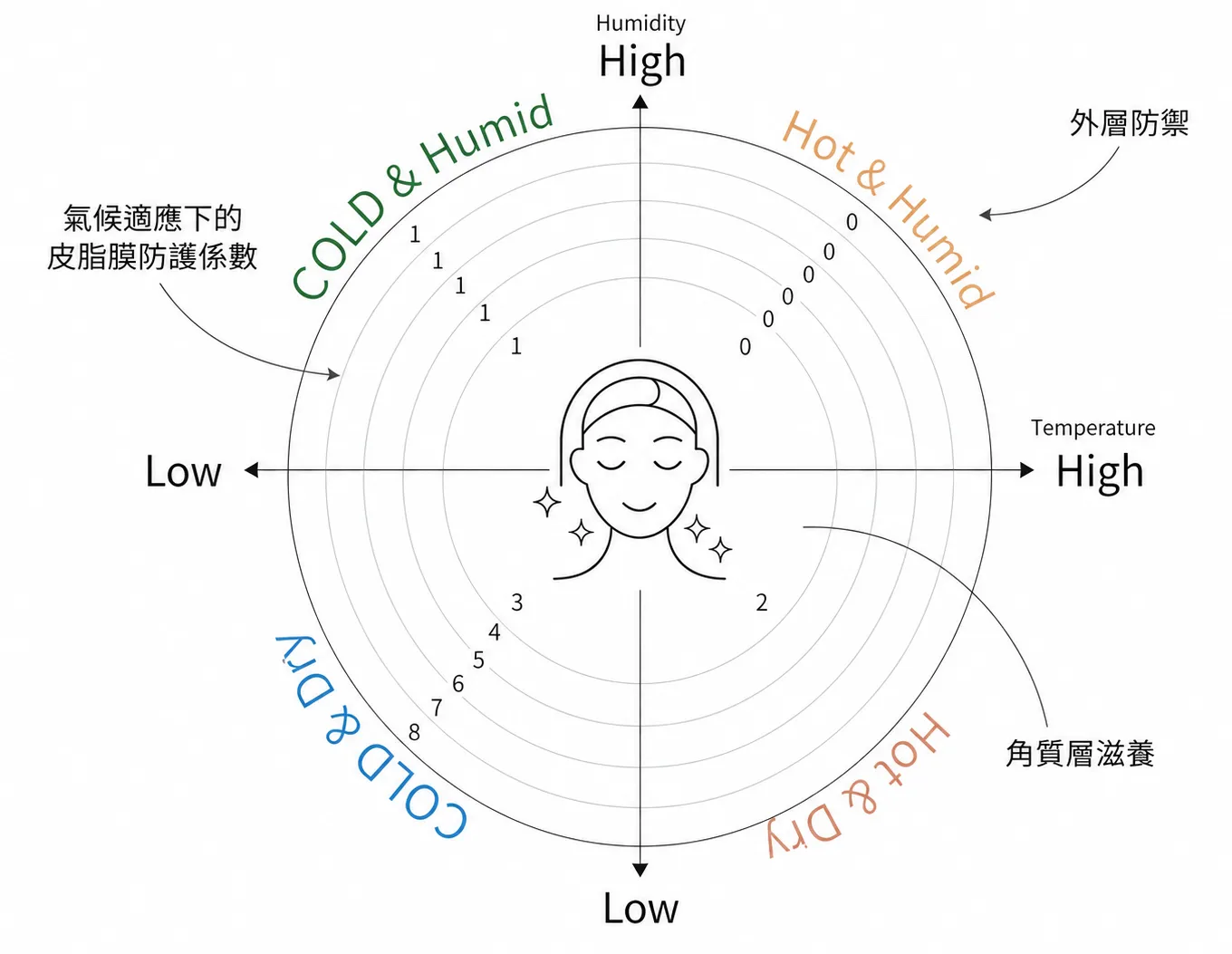
Climate and skincare are closely linked. Every layer has its own logic.
Heat, humidity, UV, air pollution and air conditioning move skin between environments many times a day, each with its own stress. Based on skin structure and external stressors, T-Dimensional Beauty proposes a three-layer care logic.
01Stratum corneum nourishment
Replenish water and lipids to maintain the structure of the stratum corneum.
02Sebum film protection
Keep oil–water balance, the skin microbiome and pH in balance as sweat and cleansing change them.
03Outer defence
Build daily protection against UV, pollution and heat.
Contact
Before a brand goes to market, confirm the fundamentals.
Brand positioning, product solutions, compliant production and channel arrangements should be confirmed together early in development.